From Robert Caspary [after 9 June 1866]1
– – been open for some days certainly and 4 were not yet quite open), giving altogether 1182 grains, amongst them 30 bad ones; this gives 2,5/100 bad grains; but this result is not fair, as I took in account all bad grains I could find, but only those few good ones—comparatively speaking—which happened to be with the bad ones on the same fields of the Microscope. Therefore the percentage of bad grains is still less than 2,5.2 I repeat the percentage of all:
good grains bad grains
Cytisus purpureus 92,3 7,7
— Laburnum 93,3 6,6
— alpinus 96,3 3,73
— Watereri 79,7 20,3
— purp.-elong. 15,2 84,8
— Adami 97,5 2,5
or rather more. or rather less.4
The worst of all as regards the pollen is therefore Cytis. purp.-elong. then Cyt. Watereri; better than all Cytisus Adami. I found allways as often as I examined the pollen of any good species, more or less abortive grains. Sometimes one scarcely finds one good grain; this remarkable fact is shown by the pollen of Cochlearia armoracia, of which I saw never any fruit! although I looked for it since 1851.5
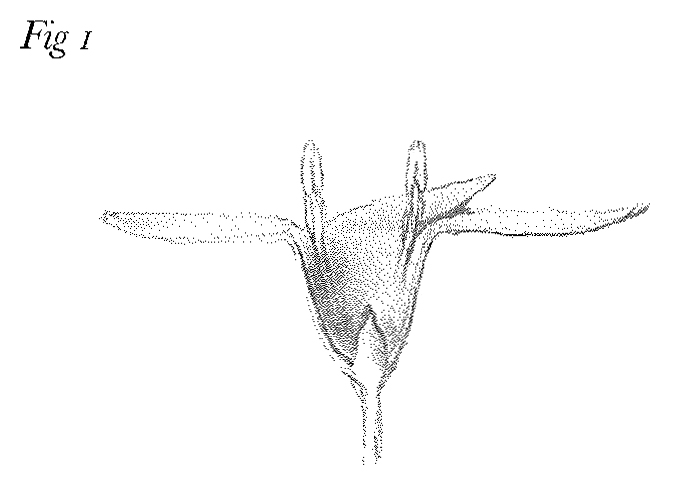
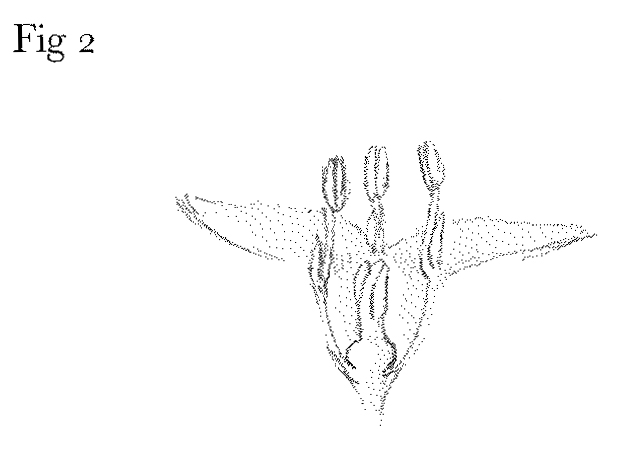
As regards Rhamnus Cathartica I have been rather unfortunate. I have 6 bushes of it in the botanic Garden here, about a week ago in full flower, but all male— I looked them over and over again, but I found no female flower or hermaphrodite upon them—6 Fig 1 represents a mere male flower, which has a quite abortive germen;7 Fig 2 a flower with a germen somewhat better, although not perfect—8 Such germens I found only partly on one bush. No body could tell me here, where I could find a female or hermaphrodite bush— The places about Koenigsberg, in which the plant was formerly plentifull, are all gone; culture has eradicated all the woods in the neighbourhood of the town. I went on the 9th. June with 20 students to the only wood, about 7 engl. miles distant from here, in which I could expect to find Rham. cathart. I explained the object to the students; we searched attentively, but could find no trace of Rhamn. cathart.
That Cytisus has as many other Leguminosae (f. i. Lupinus) short and long stamens, the anthers of which are unequal, in the same flower, you will be aware. As regards the size of the pollen I could find no difference in the two sets of anthers9
CD annotations
Please cite as “DCP-LETT-10344,” in Ɛpsilon: The Charles Darwin Collection accessed on