From Thomas Comber 15 June 1879
Redclyffe, | Newton-in-the-Willows.
15 June 1879
My dear Sir
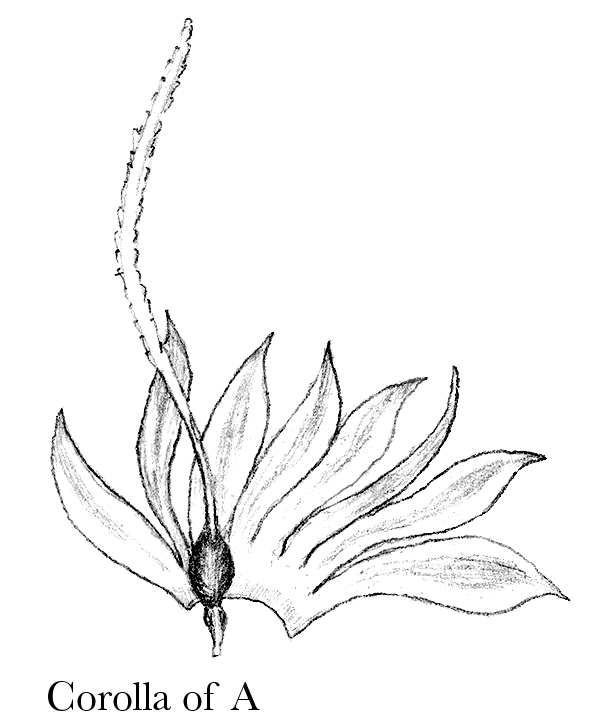
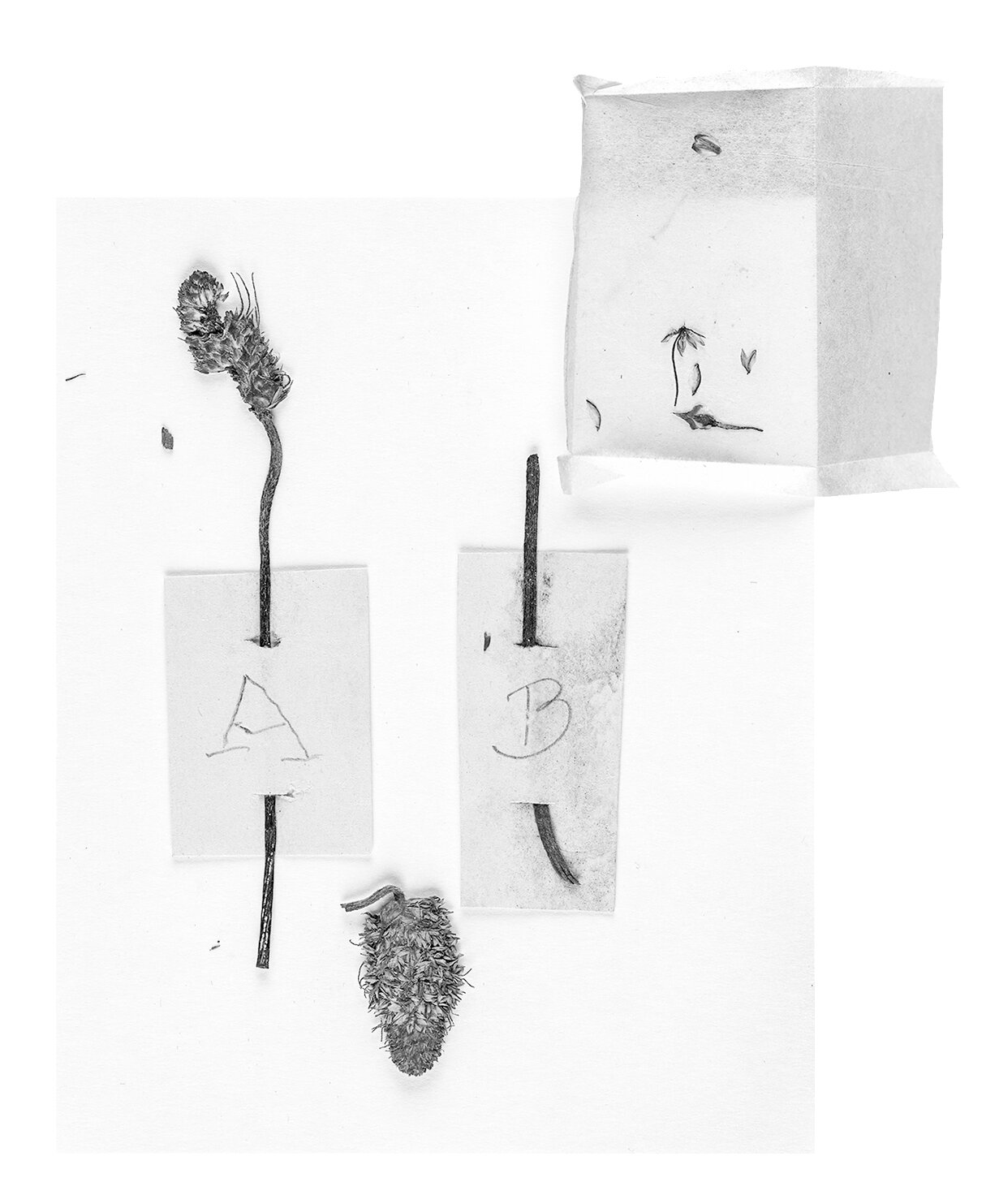
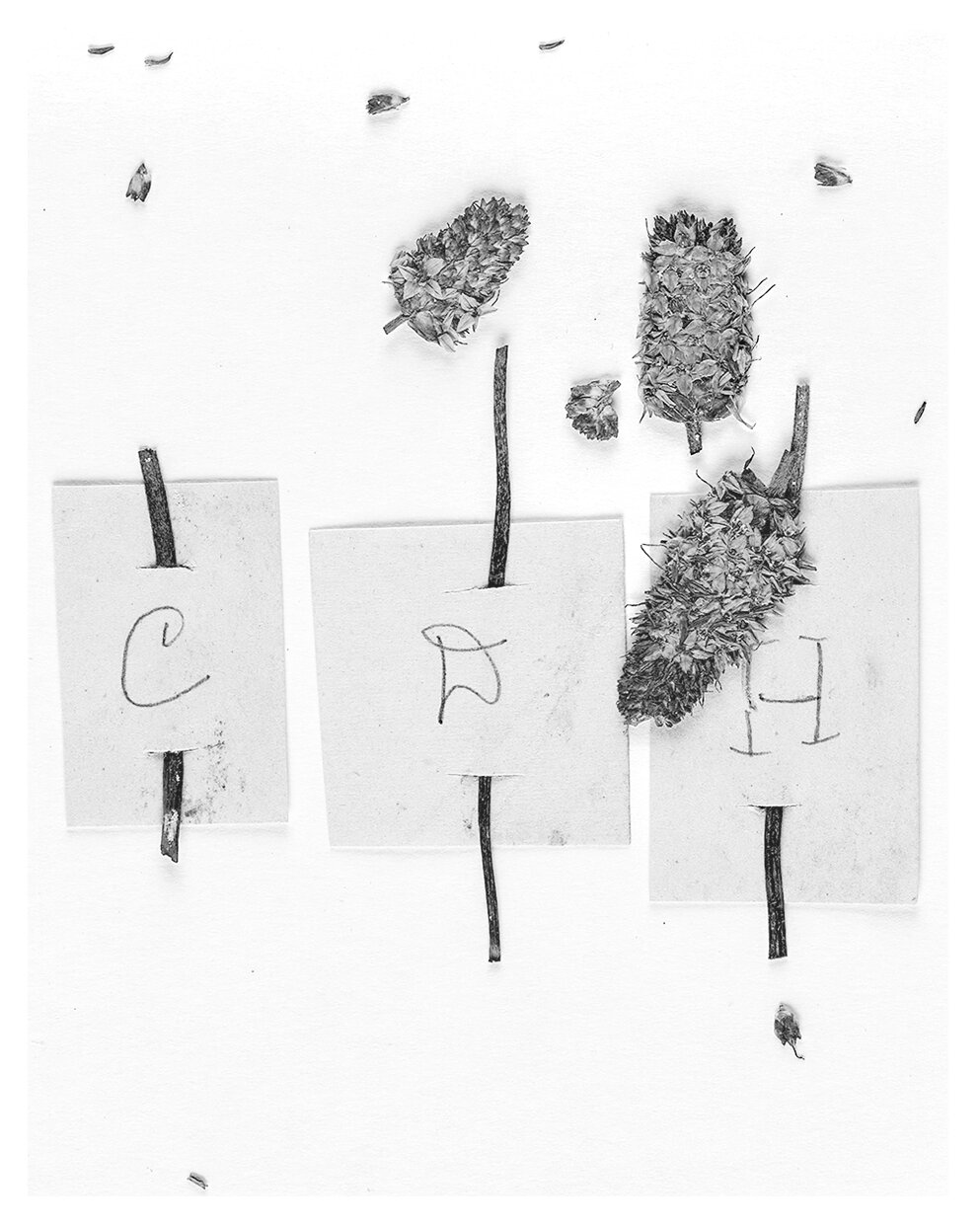
I do not know whether your attention has ever been drawn to a gyno-diœcious condition of Plantago lanceolata—1 If not, the few specimens I send you herewith may be of interest, as showing what I meet with in this neighbourhood— There is a pretty regular gradation, on different plants, from the state of the specimen marked H, in which the stamens are extruded, almost as in the normal condition but are apparently barren, for they seem to me to contain no pollen—to the state of specimens marked C. & D. in which the anthers are only just extruded from the flower— next to that of specimen marked B., in which they are not extruded at all— & lastly to that of specimen marked A, in which, so far as I can make out, there are no stamens, at any rate in some of the flowers; but the corolla is 8=cleft— In the rough sketch enclosed, I have endeavoured to represent the corolla in the dissection contained in the tissue paper—
You will see that in the two last states, A & B, the styles are longer & more persistent than is usual, not withering, as they ordinarily do in the normal form, on the extrusion of the stamens—
The plants from which the specimens have been gathered have all their spikes alike, and I find no plants producing at the same time normal and functionally ♀ flowers. The plants producing specimens A. & C. are isolated, in a good position for observation; and I shall watch whether, at a different stage of growth, they produce flowers differing from those they now bear: and, if they ripen seed, I will try to secure a supply for sowing—
Believe me | yours truly | Thomas Comber
Charles Darwin Esqre. | Down | Beckenham | Kent
[Enclosure 1]
[Enclosure 2]
[Enclosure 3]
CD annotations
Please cite as “DCP-LETT-12108,” in Ɛpsilon: The Charles Darwin Collection accessed on