From Horace Darwin 7 October 1880
66 Hills Road Cambridge
Oct. 7th. 1880
Dear Father,
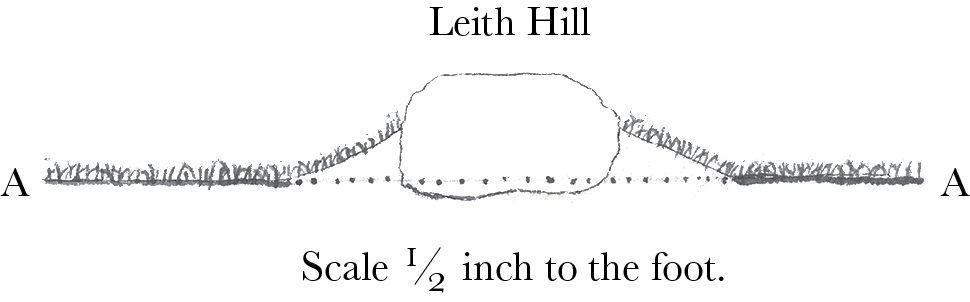
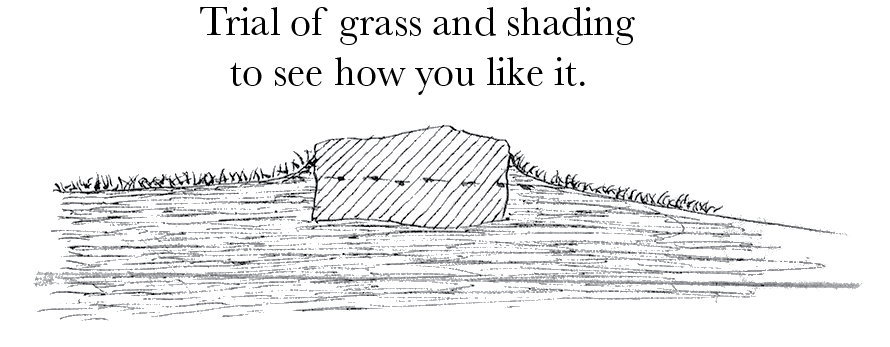
I enclose the drawing, and a couple of samples of grass and shading, which perhaps you might like to see.1 I am quite sure there is no mistake in the drawing this time. I could do the shading more carefully if you wished it done. I also send the Gravetye notes, but I dont think they will be much good.2 If you want me to ask Mr. Easton anything, I shall be in London early next week & could do so.3 He was away when I took the notes. This morning I went to the place I told you about where I had seen the worm castings. It is a little back street called Saint Tibbs Row.4 On one side there is a wall which comes down to the pavement, leaving a crack between the flags and the bricks of the wall from in. to 1 in. wide It is on the earth in this crack where I found the castings. There are some trees on the other side of the wall, but I saw no leaves about, but there were plenty of bits of straw, & grass lying near the castings. Also several small grasses were growing near the castings and on the wall there was moss. I suppose from this that this is of no use to you, shall I observe anything more about it.
We are getting a little more settled here, but things are very much upside down still, & there is plenty to do.5 George is back but I have not seen him yet, when I do I hope to hear a better account of Mother.6
Your affec son | Horace Darwin
[Enclosure 1]
[Enclosure 2]
[Enclosure 3]
Sep 10th. 1878
Gravetye Manor.
I was told that the S.W. corner of the house had settled, & I went into the cellar to see if I could see any worms at work. I found a good many at work between the stones they were small castings. The floor was damp. & I believe water lodges sometimes or rather used to lodge there, there are drains made in the floor. I only found castings near the S.W. corner, the floor having been repaved over a good piece of the cellar. There was a root between the stones in one place. In some other parts of the pavement it was possible to force anything down between the stones for a few inches, there being nothing between them or only very loose earth. The ground had been opened at the S.W. corner outside the house to a depth of about 4 feet to see if anything could be found out about the sinking but with what result I do not know.
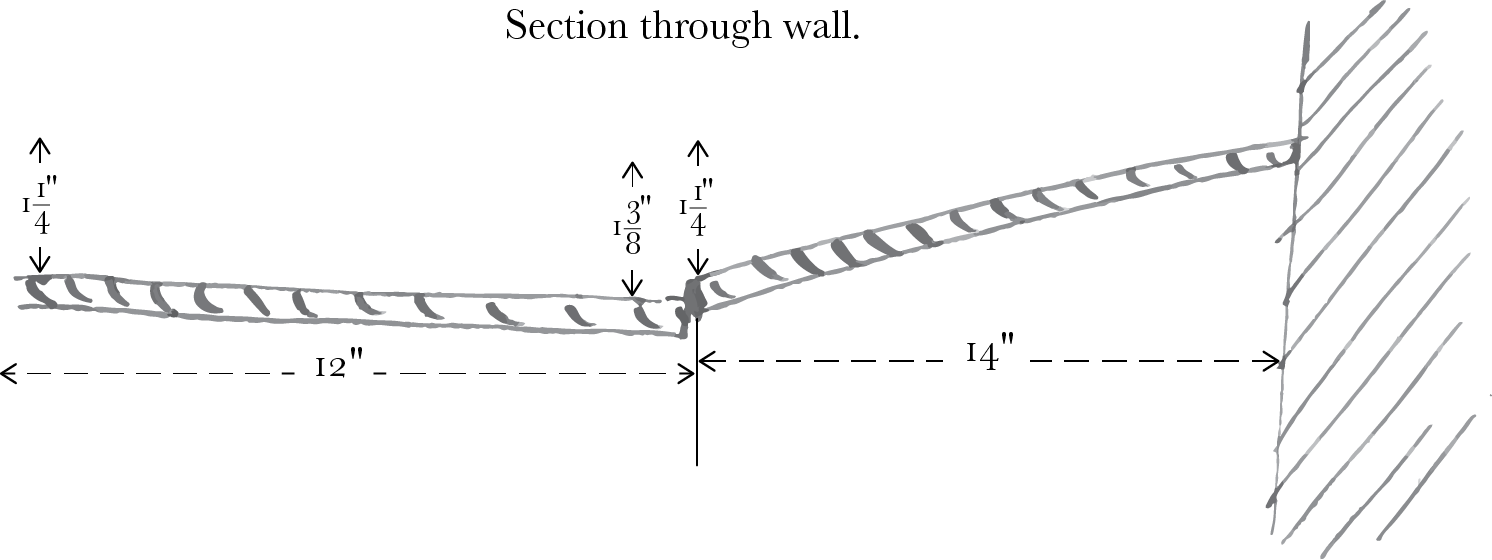
This section7 shows the start of a paving stone next to the wall, which I thought at first might be due to the worms, but I think it most likely it is not so, because the floor has gutters in it, & there is one running parallel to this wall about 14″ from it, and a little beyond the point where the section is taken, hence this stone might have been placed in the position in which I found it, so as to form the beginning of the gutter.
CD annotations
CD note:
Enclosure 1 verso:
Description
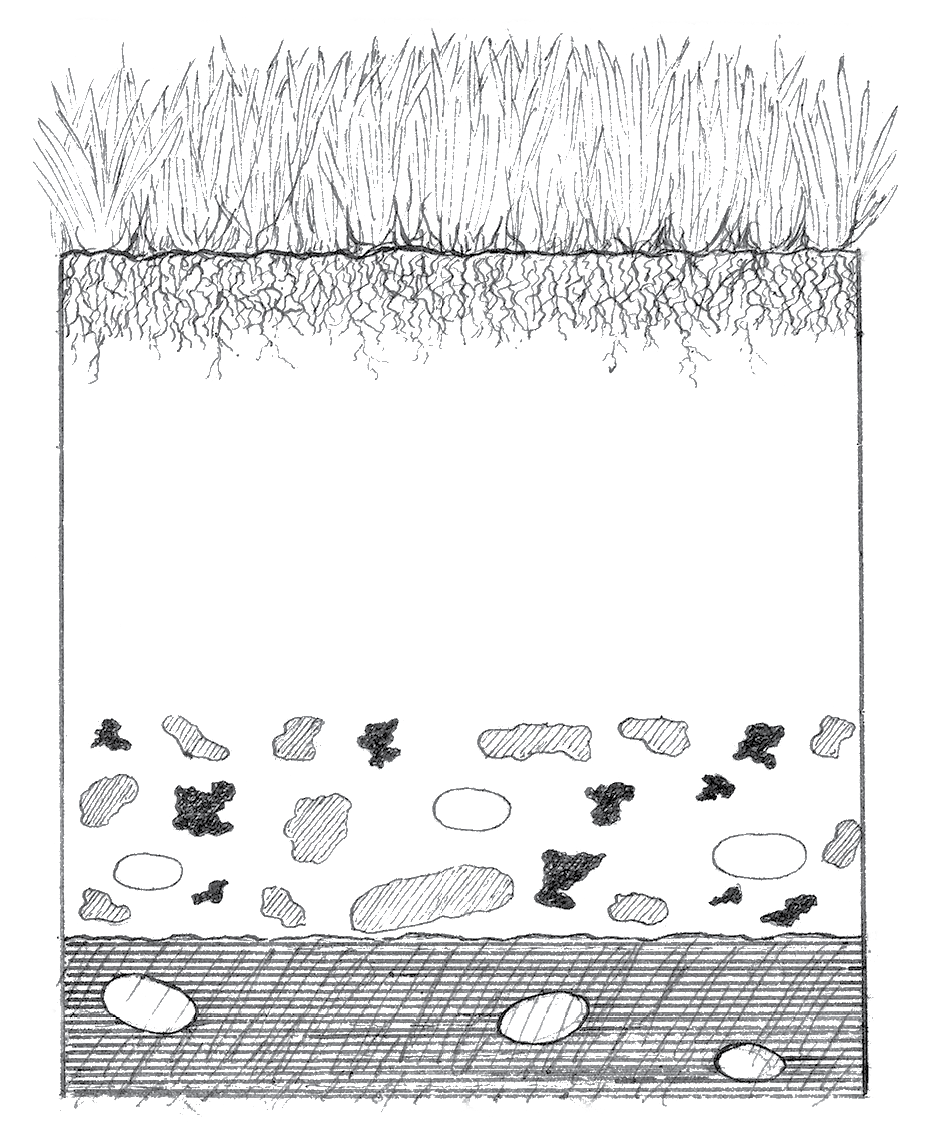
Section in field at Maer Hall
Reduced to natural scale
A. Turf inch
B. fine vegetable mould 2 inches
C. Mould with fragments (describe) 21
D. Substratum of black peaty soil with grey pebbles
Please cite as “DCP-LETT-12742,” in Ɛpsilon: The Charles Darwin Collection accessed on