From Francis Darwin [after 17 June 1881]1
To C. D.
I am afraid I can’t give what Cohen said very well.2 The cream of it is that he looked very carefully over a great number of Hahn’s preparns and he can say with absolute certainly that he saw nothing that might not have anorganic.3 He said he wouldn’t speak at all on the question whether they could be organic, but a pupil of his who had been working at the structure of fossil corals pointed out several points in which Hahns things differ essentially from corals, especially Favosites.4 Cohen said the supposed fossils were made of substances which never or very rarely form fossils on the earth. He also said that in earthly fossils you got great masses all of the same together, whereas in Hahns prepns there are numbers of species in together. The form which Hahn makes a great point of
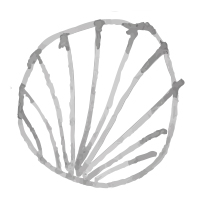 a number of lines radiating from the side of a circle is especially characteristic of undoubted anorganic structures. Hahn brings forward the irregularity (or regularity I forget which) of certain forms as proof of their organic nature and to show that Hahn did not know about the structure of minerals Cohen said if he had to argue on this basis it would be just they contrary, their regularity (or irregularity as case may be) would speak for their organic origin.
In spite of all I gathered that they were unusual & remarkable forms but I didn’t quite catch what he said about this; I came late & sat far back
Please cite as “DCP-LETT-13208G,” in Ɛpsilon: The Charles Darwin Collection accessed on