To J. D. Cooper 4 February 1882
Down, | Beckenham, Kent. | (Railway Station | Orpington. S.E.R.)
Febr 4th. 1882.
My dear Sir
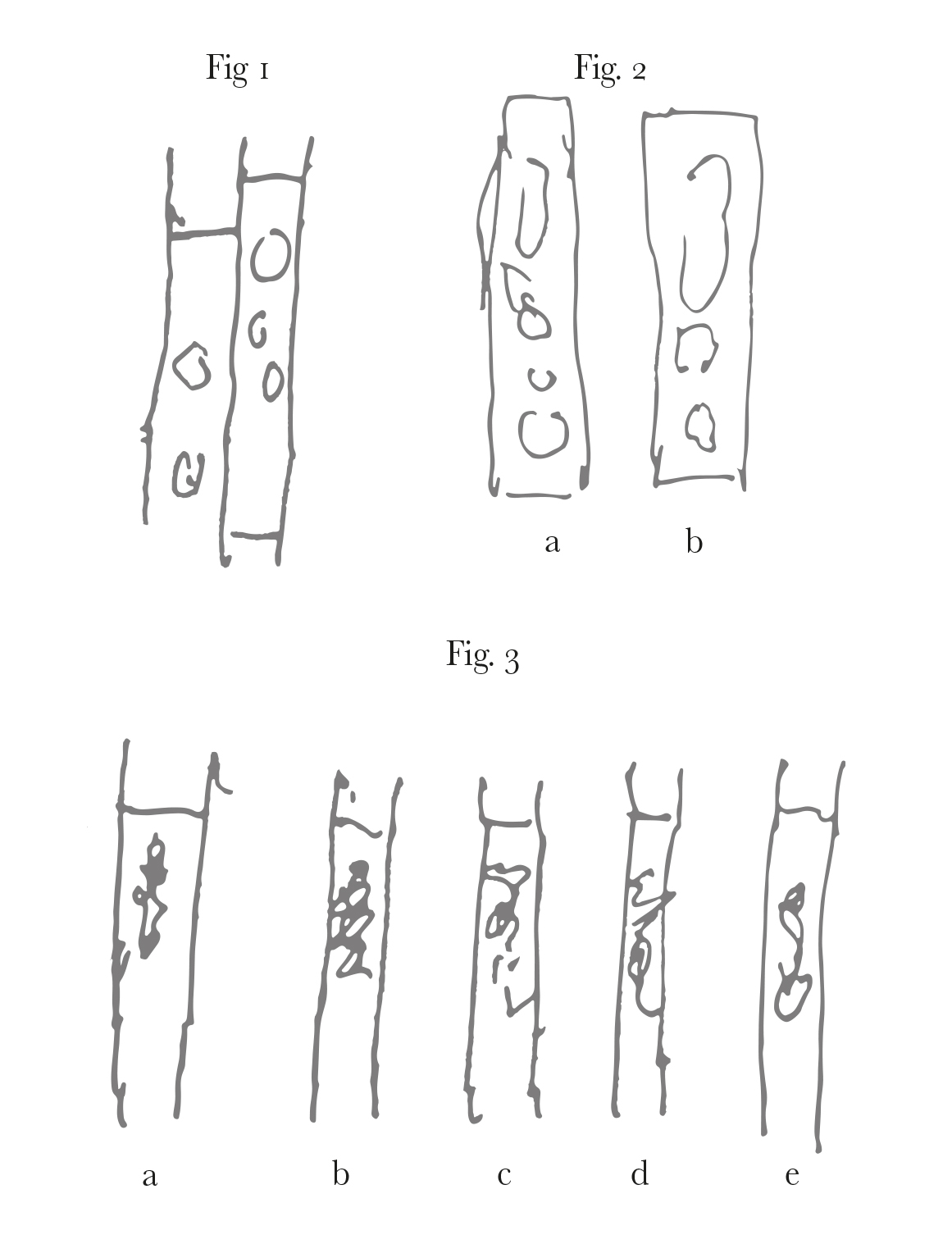
Will you be so good as to make on wood copies of the cuts enclosed in blue lines in Plate to enclosed paper.— Figs 1 & 2 to stand along side one another in upper line & Fig 3 (viz a, b, c, d, e,) in lower lines— Then, a, b, c &c, could stand rather closer together.—1
They must be fac-similes, the dark & pale purple being represented by darker & lighter shading.— The lines must all be delicate, as all are greatly magnified.2 Be so kind as to put them in hand as soon as you possibly can, as I want them for a paper soon to be read before Linnean Soc.y. Fig I & 2 & 3 might be given in type; but a & b, in fig. 2, & a, b, c, d, & e in Fig 3 must be engraved.—
Dear Sir | Yours very faithfully | Charles Darwin
I wish the pamphlet to be returned.—3 I shall soon have another sketch to be engraved.4
Manuscript Alterations and Comments
Please cite as “DCP-LETT-13658,” in Ɛpsilon: The Charles Darwin Collection accessed on