From William Allport Leighton 29 May 1865
Luciefelde | Shrewsbury
May 29. 1865.
My dear Sir,
Noticing the operations of a small Humble Bee, about the size of a horse bean, on the flowers of Lupinus polyphyllus, I was induced to examine more particularly the blossoms. I found that if the blossom be examined before the standard is reflexed, that the tube of stamens bears alternately five very large sagittate anthers, and five very small (comparatively) rounded or oblong anthers. (This is noticed by Vaucher)1 The sagittate-anthered stamens are about rds. the length of the pistil—the pollen of their anther-cells is mature and is even now falling away. On the contrary the small oblong-anthered stamens reach only in length to the base of the sagittate anthers & are about rd. the length of the pistil. Moreover their pollen is not ready and their anther-cells are closed.
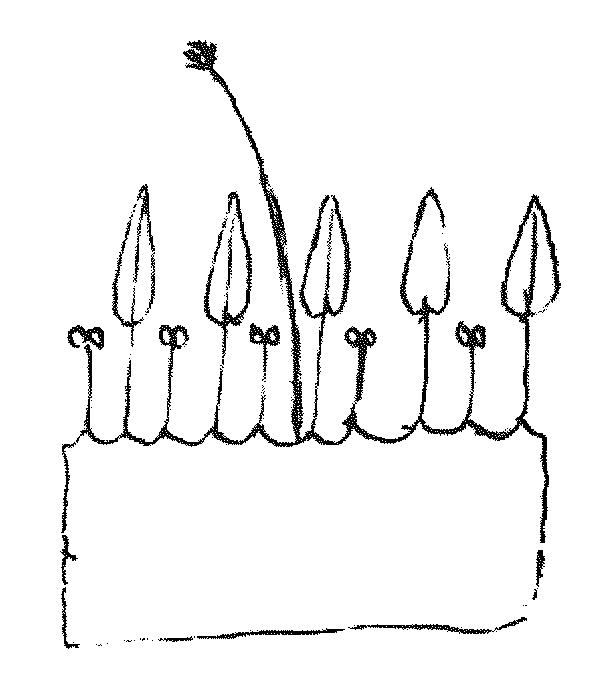
Examining the stigma I could not discover that as yet, any pollen was deposited on it. Nor did the microscope disclose any appreciable difference in the size or form of the pollen grains of the two sets of anthers.
Now if we examine the blossom after the standard has become reflexed, we find that the large sagittate-anthered stamens still maintain their relative length with the pistil—that their pollen has fallen & the anther cells & the entire stamens are withering away. But that the shorter stamens have become elongated to the length of the pistil,—four of them having their upper portions entirely covered with pollen—all trace of the anther cell having disappeared—and the 5th. or that opposite to the standard having withered away. The stigma also is now observed to have pollen grains on it.
When the blossoms were thus fully matured, I observed that the humble bee alighting on the alæ, bore them downwards by his weight, and in so doing at the same time caused a slight downward movement in the closed keel, whereby the pollen was extruded through the apex, and that the extruded pollen coming in consequence into contact with the body of the bee as he inserted his proboscis to the base of the stamens, became attached to it, & was carried away by him to other blossoms.
The following questions readily suggest themselves:— What becomes of the immense quantity of pollen of the large sagittate anthers? It can scarcely be useless— is it carried by insects or otherwise to fertilize other individual plants possessing pistils of similar relative length? Is the plant really fertilized by the shorter stamens when elongated to an equal relative length with the pistil, ⟨an⟩d is this fertilization effected by the agency of the bee?
The few plants in my garden presenting similar structure, I am unable to carry this investigation further. I therefore venture to send it to you, though in doing so I feel that I may be incurring the risk of “sending coals to Newcastle”2
Believe me, my dear Sir | Yours most truly | Willm. Allport Leighton
Charles Darwin Esq.
CD annotations
Please cite as “DCP-LETT-4840,” in Ɛpsilon: The Charles Darwin Collection accessed on