From A. C. Ramsay 27 December 1871
Jermyn St.
27 Dec 1871
My dear Mr Darwin
Though tardy I hope I am not too late1
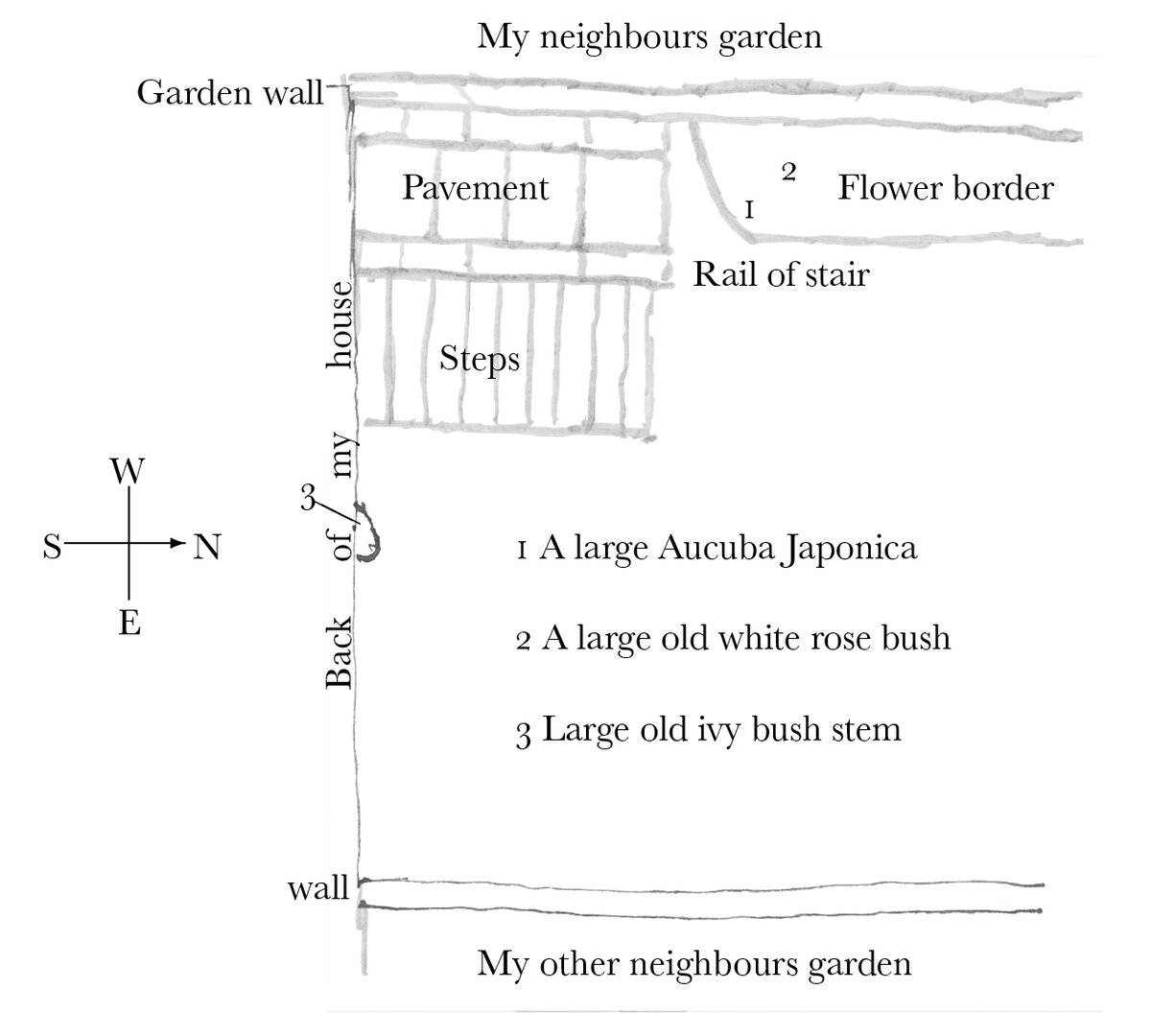
The pavement lies in a little garden, between a short outside stair & a brick wall. It is 7 feet in length by 3 ft 2 inches in width. Adhering to the walls there is the cement that I suppose originally was used when the stones were laid down. In the centre of the pavement (measuring across the width the stones seem to have sunk as near as may b⟨e⟩ three inches, and about two at the sides. At the upper end, where it adjoins the house there is no sinking close to the house, but it begins immediately outside that line of junction. A cross section is like this.
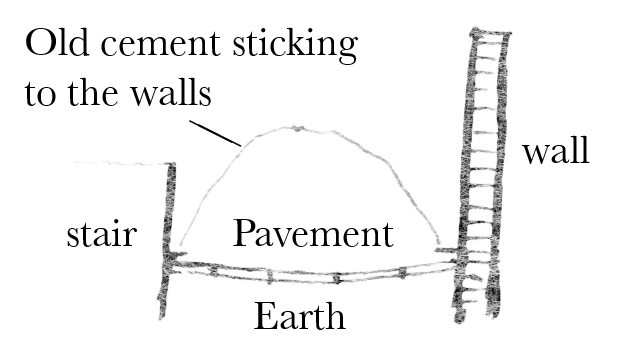
Measuring a square yard in the centre of the space, the average ⟨s⟩inking might perhaps be taken ⟨at⟩ about 2 inches.2
As far as I can make out ⟨the⟩ house was built about 1784, and may therefore be assumed to be 87 years old.
My informant on this point is Mr Mylne, whose ancestor built Holyrood, and the family have been architects & engineers ever since.3 He is curious abt the ages of houses.
I cannot say that the pavement was never moved all that time, but the stones seem to be old Portland stones, such as were much used long ago in London. I have only been 12 years in the house. I am confident abt the worms, in so far that I have frequently seen their leavings along the lines where the stones join
I noticed them on Monday last when I made the measurements. I cannot say what is the precise nature of the stuff below. What the worms bring up is black earth.
The native soil there is old Thames flint gravel partly in a clayey matrix. We have a well in it.
I forgot to measure the size of the stones. I will do so tomorrow morning.
Yours very truly | Andw C Ramsay
[Enclosure]
CD annotations
Please cite as “DCP-LETT-8122,” in Ɛpsilon: The Charles Darwin Collection accessed on