From Robert Bunsen 6n Maerz 1853
Heidelberg | 6n März 1853.
Theuerster Freund
Ich habe mich von ganzem Herzen über den schönen Erfolg Ihrer Londoner Vorlesungen gefreut, und schöpfe daraus die beruhigende Hoffnung, daß Ihnen im eigenen Vaterlande eine Zukunft bevorsteht, die alle bösen Reisegedanken nach Australien am besten verscheuchen wird.
Die Wahl Ihrer nächsten Luft- und Waßervorlesen ist glaube ich eine sehr glückliche, weil sich darüber am besten vor einem gemischten Publicum reden läßt. Ich gebe Ihnen nachstehend eine Disposition für die Waßervorlesungen wie ich sie etwa halten würde, woraus Sie sich dann, was Ihnen etwa für Ihr Publicum paßend scheint, entnehmen können.

I Chemische Beziehungen des Waßers
1. Qualitative Zusammensetzung: a Verbrennen von H in trocknem Sauerstoff.

b Verbrennen von O in H.

Man läßt zuerst das O in einem nicht zu starken Strahl ausströmen entzündet das H am Halse der Flasche und senkt sie langsam über die O-ausströmungsspitze a, wobei sich das O entzündet und in der H Atmosphäre fortbrennt. Einige Diskurse über die Flamme. Gelbe Farbe u Leuchte kommt vom verflüchtigten Natron des Glases - Temperatur der Flamme aus der Verbrennungswärme und der specifischen Wärme des Waßerdampfs berechnet (Explosion von Knallgas??)
2 Quantitative Zusammensetzung: Im Eudiometer mit Quecksilber ist in einer Vorlesung unausführbar. Am einfachsten durch einen geeigneten electrolytischen Apparat mit Thonzelle wobei man beide aus Entwicklungsröhren entweichende Gase in graduirten Röhren auffängt. Der Apparat ist so [eingerichtet], daß die Gase nachdem sie in den Röhren aufgefangen, unter gleichem Waßerdruck stehen.– Wenden Sie ein Eudiometer an, so ist um ein Zerspringen zu verhüten darauf zu sehen, daß von dem einen Gase mindestens 2-3 mal soviel vorhanden ist, als zur vollständ. Verbrennung nöthig ist.
3. Chem. Eigenschaften: a Waßer als Säure ([Löschen] von Kalk) b Waßer als Basis (waßerfreie flüßige in Waßer gegoßen) c Waßer als Krystallwaßer (Erstarren von im Krystallwaßer geschmolzenen ). d, Verhalten gegen einfache u zusammenges. Körper. Zersetzung des # durch Kalium Natrium etc. Davy’sche Vulkanentheorie. Natürliche Waßerzersetzungen und Aufklärung über diese Davy’sche Theorie finden Sie in der beigesandten Abhandlung A von p 42 an u. folgende: Chemische Zerstörung der Gesteine.
II a Farbe des Waßers cf. beigesandte Abhandl B p. 44
b Anomalie der Ausdehnung-Explosion von Glasröhren in warmer #, [2 words illegible] Kältemischung.

Die Röhren müßen bei a durch Zusammenfallen vor der Lampe etwas verdickt und die Haarröhrchen sehr fein sein, damit der Raum von b bis c beim Zerschmelzen waßerleer sein kann. Aus dem Versuch abgeleitet: die zerstörenden mechanischen Wirkungen des Frostes auf Gesteine und Pflanzen. Wohlthätiger Einfluß des Gefrierens auf den Ackerboden (Pulverisirmethode der [Natur]) [1 word illeg] Kriechen der Gletscher etc. Große Warmecapacität des Waßers. Der Ocean als großes Wärmemagazin zur Regulirung der klimatischen Temperaturverhältniße.– Continentalklima u. oceanischer oder Küstenklima. Der Winter in Mailand (Milano Lombardei) ist strenger als der in Island etc. etc.
III Vereinte mechanische und chemische Wirkungen des Waßers. Vulkane und Erdbeben cf. Abhandl A p. 42. Metamorphose der Gesteine durch Waßereinwirkung (cf. Bischoffs chemische Geologie) Ich glaube daß Sie an dieser Stelle eine Reihe prächtiger Versuche über die Isländischen Geisirquellen anstellen können, die sehr schön und überraschend sind, und die sich mit dem in Zeichnung beiliegenden von Dr Bromeis (einem Schüler von mir) angegeben[en] Apparat leicht ausführen laßen.
a a ist ein Rohr von Zinkblech auf der Kohlenpfanne B. C ist eine zweite korbförmige Kohlenpfanne um die seitliche Erhitzung des Geisirrohrs nachzuahmen. D eine große Blechschaale das Geisirbecken repräsentirend: Die Röhre a a wird mit kochendem Waßer [gefüllt] (kochend um nicht zu lange auf die Erhitzung zu warten) und dann gefeuert. Sobald das Waßer zum Kochen kommt, beginnt das periodische Spiel des Geisirs, mit allen Eigenthumlichkeiten wie ich es in der Abhandlung B von p 24 an beschrieben habe. Verstopft man die Oeffnung k ganz locker mit einem Pfropf, so hat man nach einiger Zeit die Strokkereruption in ihrer ganzen Schönheit en Miniature. Durch verengte Aufsätze auf die Offnung kann man auch die Erscheinungen der übrigen Islandischen Springquellen nachahmen. Ueber diese müßen Sie Mackenzie’s und des Mißionars Hendersons Reisen in Island nachlesen. Die Versuche sind die [effect]vollsten die man sehen kann, und der ganze Gegenstand ist sehr anziehend. Versäumen Sie ja nicht im Britischen Museum und in der Royal Society nachzuforschen, was dort von Solander’s und Bank’s Papieren über ihre Beobachtungen am Geisir noch etwa aufzutreiben ist. Solche ungedruckte Papiere sollen sich dort noch finden. Mir würde Auskunft darüber und Einsicht dieser Papieren von großem Werth sein. Ich lege Ihnen noch ein Buch bei was Ihnen als Quelle sehr erwünscht sein wird, bitte Sie aber mir die sämmtlichen Drucksachen nebst der Zeichnung des Geisirapparats später wieder [zukommen] zu lassen, da es die einzigen Exemplare sind die ich <several words missing> [1 word illeg] brauche.
Von Herzen | <1 line missing>
Heidelberg | 6th March 1853.
Dearest friend,
I was deeply pleased about the wonderful success of your London lectures1 and draw from them the reassuring hope that a future lies in store for you in your own homeland that will best drive away all the bad thoughts about travelling to Australia.2
The choice of your next lectures on air and water3 is, I believe, a very happy one because this is the best topic to talk about before a mixed audience. I am giving you in the following an outline for the lectures on water as I would more or less present them, from which you can then take what seems to you to be more or less suitable for your audience.
I Chemical relations of water
1. Qualitative composition: a Combustion of H in dry oxygen
b Combustion of O in H.
One first lets the O stream out in a not too strong jet, ignites the H at the neck of the bottle and lowers it slowly over the tip of the O stream a, whereby the O ignites and continues to burn in the H atmosphere. Some discussions about the flame. Yellow colour and glow come from the evaporated sodium bicarbonate of the glass – temperature of the flame calculated from the heat from the combustion and the specific heat of the steam (oxyhydrogen explosion??)
2 Quantitative composition: Cannot be carried out in the eudiometer4 with mercury in a lecture. Simplest using a suitable electrolytic apparatus with a porous pot cell,5 whereby one collects both gases in graduated tubes as they escape from delivery tubes.6 The apparatus is [set up] in such a way that the gases are under equal water pressure after they are collected in the tubes.– If you use an eudiometer, make sure that, in order to avoid bursting, at least 2–3 times as much of the one gas is present than is necessary for complete combustion.
3. Chem. properties: a Water as acid ([slaking] of lime)7 b Water as base (water-free liquid, poured in water) c Water as crystallisation water (solidification of melted in crystallisation water)8 d, Reaction towards simple and compound bodies. Decomposition of # through potassium sodium etc. Davy’s theory of volcanoes.9 You will find the natural decompositions of water and an explanation of this theory of Davy’s in the enclosed paper A10 from p 42 on and the following: chemical destruction of rocks.
II a Colour of the water cf. enclosed paper B11 p.44
b Anomaly of the expansion-explosion of glass tubes in warm #, [as in] cold mixture.
The tubes must be somewhat widened at a due to their converging before the lamp and the capillary tubes must be very fine, so that the space between b and c can be free of water during melting. Deducted from the experiment: the destructive mechanical effects of frost on rocks and plants. Beneficial influence of freezing on soil (pulverization method of [Nature]), [1 word illeg] creeping of glaciers, etc. Great thermal capacity of water. The ocean as large heat reservoir for the regulation of climatic temperature conditions.– Continental climate and oceanic or coastal climate. Winter in Milan (Milano Lombardy) is more severe than that in Iceland, etc. etc.
III Combined mechanical and chemical effects of water. Volcanoes and earthquakes cf paper A p. 42. Metamorphosis of rocks due to the actions of water (cf. Bischoff's chemical geology).12 I believe that at this point you can do a series of splendid experiments about the Icelandic geyser springs13 that are very nice and surprising and that can be carried out easily with the apparatus of Dr Bromeis14 (a student of mine) depicted in the enclosed sketch.15
a a is a tube made of zinc plate on top of the coal pan B. C is a second, basket-shaped coal pan to simulate the lateral heating of the geyser's pipe. D is a large tin bowl representing the geyser's basin: Tube a a is [filled] with boiling water (boiling so as not to wait too long for it to heat up) and then fired. As soon as the water comes to the boil, the periodic play of the geyser begins, with all the peculiarities as I have described in paper B, from p 24 on. If one blocks the opening k quite loosely with a stopper, one has after some time the Strokkur eruption16 in all its beauty in miniature. By placing constricting caps on the opening, one can also simulate the appearance of the other Icelandic springs. About the latter, you will have to look up Mackenzie’s and the missionary Henderson’s travels in Iceland.17 The experiments are the most [effective] that one can see, and the whole subject is very appealing. Do not neglect to try and find out at the British Museum18 and at the Royal Society what can be still found there from Solander’s and Banks’s papers19 about their observations of the geyser. Such unpublished papers are still to be found there. Any information about them and a look at these papers would be of great value to me. I am enclosing one more book20 for you which will be very welcome to you as a source, but I ask you to [return] all printed matter together with the drawing of the geyser’s apparatus to me later, as these are the only copies that I <several words missing> need.
Sincerely | <1 line missing>
RI MS JT/1/B/144
your London lectures: a likely reference to Tyndall’s lecture at the RI on 11 February (see letter 0713).
Australia: in mid-1851, Tyndall had applied for two jobs: one in Toronto, Canada and one in Sydney, Australia. The position in Sydney was for a professorship in experimental philosophy at a new university that was being established there (see letters 0558; 0561; 0568; and 0587). There is no mention of apprehension regarding the prospect of moving abroad in Tyndall’s journals despite what Bunsen is alluding to here (see, for instance, 4 November 1851, JT/2/13b/550).
your … air and water: Tyndall was invited to give four lectures at the RI (see letter 0717) after the success of his inaugural appearance (see n. 1). He accepted, proposing that the lectures be given under the title, ‘On Air and Water’ (see letter 0720). The lectures were scheduled for May and June (see letter 0722).
eudiometer: an instrument for testing the quantity of oxygen in the air (OED).
electrolytic … porous pot cell: the term ‘electrolytic’ refers to the nature of electrolysis, which is the process of passing a current through a liquid to produce a chemical reaction at the electrodes (OED). A porous pot cell is a battery-like apparatus constructed using unglazed pottery as a barrier between the anode and the cathode. The porous barrier allows for the passage of ions, while keeping the respective chemical solutions on either side of the barrier from mixing.
both gases … delivery tubes: ‘both gases’ refers to hydrogen and oxygen.
slaking of lime: the process of hydrating quicklime (calcium oxide), turning it into lime (calcium hydroxide) by adding water.
solidification of 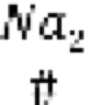
 melted in crystallisation water: the mathematical equation for explaining this melting process.
Davy’s theory of volcanoes: Humphry Davy’s theory asserted that eruption of volcanoes was caused by the heat generated in the chemical reaction between metal oxides and air and water below the earth’s surface (H. Davy, ‘On the Phaenomena of Volcanoes’, Phil. Trans. 118 [January 1828], pp. 241–50).
enclosed paper A: not identified.
enclosed paper B: not identified.
(cf. Bischoff’s chemical geology): Karl Gustav Bischof (1792–1870), a German chemist and founder of chemical geology, applied chemical theory to explain the mechanisms behind geological systems.
Icelandic geyser springs: geysers are springs that intermittently shoot water and steam into the air with force. Geologically, they require the presence of a water supply that circulates, and a heat source. They are usually in close proximity to areas with volcanic activity, like Iceland, which is famous for its geysers and hot springs.
apparatus of Dr Bromeis: Bunsen developed an apparatus to recreate artificially the geyser in the lab, accredited here to Johann Konrad Bromeis, his former student. The apparatus consisted of a basin of water with a long tube inserted through the center. The tube would then be heated at the bottom and near the middle of the tube, resulting in a geyser-like eruption of water once the temperature and pressure were raised sufficiently (J. Le Conte, ‘Geysers and How they are Explained’, The Popular Science Monthly 12 [February 1878], pp. 407–417).
enclosed sketch: not identified.
Strokkur eruption: Strokkur, located east of Reykjavik, is one of Iceland’s most famous fountain geysers. It erupts every 4–8 minutes with a height of 15–40 meters.
Mackenzie’s and the missionary Henderson’s travels in Iceland: George Steuart Mackenzie (1780–1848) was a Scottish mineralogist who travelled to Iceland in 1810 in order to explore its geology. His account of his travels was documented in Travels in the Island of Iceland (Edinburgh: Archibald Constable and Company, 1812). Ebenezer Henderson (1784–1858) was a Scottish missionary who travelled to Iceland in 1814–15 in order to distribute bibles. His account was entitled Iceland: Or a Journal of a Residence In That Island, During the Years 1814 and 1815, 2 vols (Edinburgh: Oliphant, Waugh and Innes, 1818).
British Museum: established at London in 1753 from the collections of the naturalist Hans Sloane (1660–1753). Exhibits showcased all aspects of human cultural history.
Solander’s and Banks’s papers: Joseph Banks (1743–1820), a naturalist and patron of the sciences, travelled to Iceland in 1772 with Daniel Charles Solander (1733–1782), a Swedish naturalist who catalogued collections at the British Museum. Their observations were published in Uno Von Troil, Letters on Iceland (London: J. Robson, 1780).
enclosing one more book: not identified.
Please cite as “Tyndall0728,” in Ɛpsilon: The John Tyndall Collection accessed on