From Edward Sabine Jany 18. 1861
13 Ashley Place S. W. | Jan[uar]y 18. 1861
Dear Tyndall.
Perhaps you will like to see in operation the next stage to that which you saw at Kew. The photograms are taken to Woolwich, where tables are formed from them such as I enclose a specimen.1 The direction of the magnet at every solar hour is measured from the Photogram, & entered each hour in the monthly table is then separately summed up & a mean taken. These are the first normals—Then every entry which differs 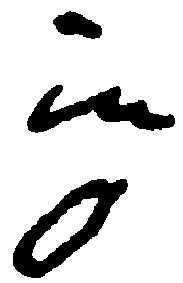 .150 from its first normal is marked with a ring in pencil. The first normals are then corrected by the omission of those pencil ringed directions, which gives second normals. The process is then repeated till the means at each hour in a month are the true means of all the directions, excluding those which differ more than
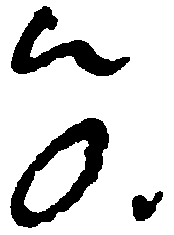 150 from these, the final normals—The larger disturbances, so indicated, are then marked with a ring in ink, as you see them—and the sheet comes up to me to have marked in small figures, (as you will see done in September
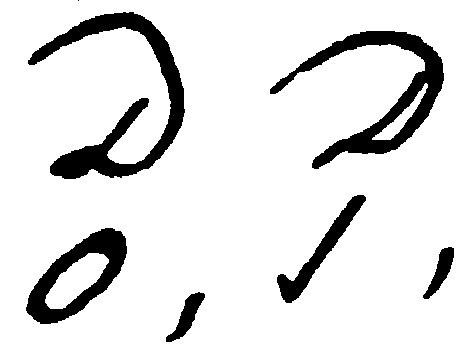 and
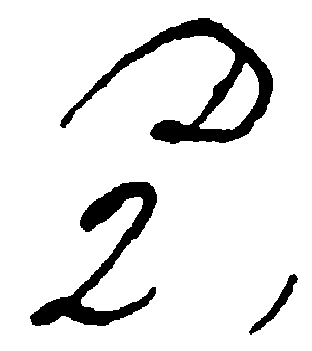 ) the lunar hour to which each direction most nearly corresponds.
I then return the sheets to the office, then Lunar Monthly Tables are written from them (omitting all the directions which have an ink ring). Then commences the process of distributing the larger disturbances into the hours, months & years of their occurrence & comparing these, which I do not go into, as it is a stage beyond the table which I now send.
Sincerely yours | Edward Sabine
RI MS JT/1/S/20
RI MS JT/1/TYP/4/1315
such as I enclose a specimen: enclosure missing. From 1858–64, staff at Kew Observatory were involved in calculating the lunar-diurnal variation of the magnetic elements shown from magnetograms. In order to determine the lunar-diurnal variation, photograms were used to record the hourly changes in position, from a permanent zero, of a magnet whose motion was limited to a horizontal plane, and the amount of horizontal or vertical elements of force acting on a freely suspended magnet. An instrument was devised at Kew to tabulate the values, and their accuracy was checked by repetition of the process. However, there were not enough staff at Kew to undertake these tabulations, and so Sabine had the positions tabulated at the Magnetic Office at Woolwich. See letter 1764 for further details.
Please cite as “Tyndall1760,” in Ɛpsilon: The John Tyndall Collection accessed on