From John Frederick William Herschel Jan. 5/63
Collingwood | Jan. 5/63
My dear Sir,
I can have no sort of objection to your printing as much of my note referred to by you1 as you think proper.
I like your idea of accounting for the blue colour of the air as due to the vapour of a blue liquid (water) if you intend it to be regarded as an absorptive colour.2 Analogies are not wanting. Liquid Chlorine is yellow. so is the gas. Iodine is a very deep coloured substance & I presume its colour if it could be perceived through an excessively thin edge of a crystal of it would be deep purple. Its vapour is so. The vapour of Bromine (a deep ruddy brown liquid) is also ruddy brown.—I do not at once recollect other liquids which distill ever coloured but I dare say one might call to mind many—and it would be interesting to pursue the analogy. Sulphur heated above its melting point is brown—so is its vapour.
As to the polarization of the sky (having a maximum at 45° incidence but far from complete polarization at that maximum) I do not very well see how this can be specially connected with the vapour of water. The broad fact however that the polar[izatio]n of sky light is most intense when the sky is most completely free from visible haze or cloud—seems to look that way. But after all the question remains in all its obscurity—“How is the polarization of the sky light effected?” and I own that all the accounts I have seen of it are to me most unsatisfactory.3
It may very well be that the absorptive power of the vapor “pro quantitate materiae”4 may be much greater than of its liquid. In nitrous gas (when heated) it is enormous & I should think from the very moderate thickness of chlorine gas & bromine vapour (& the exceedingly small one of Iodine D—) which suffices to show colour, that in these liquids it is so.—If not, I cannot understood how there can be water enough in the air to shew colour.—Take a vapour tension of 0.25 in and suppose 20 feet of water sufficient to shew a sky blue colour. This would require reflexion enough to carry the ray through 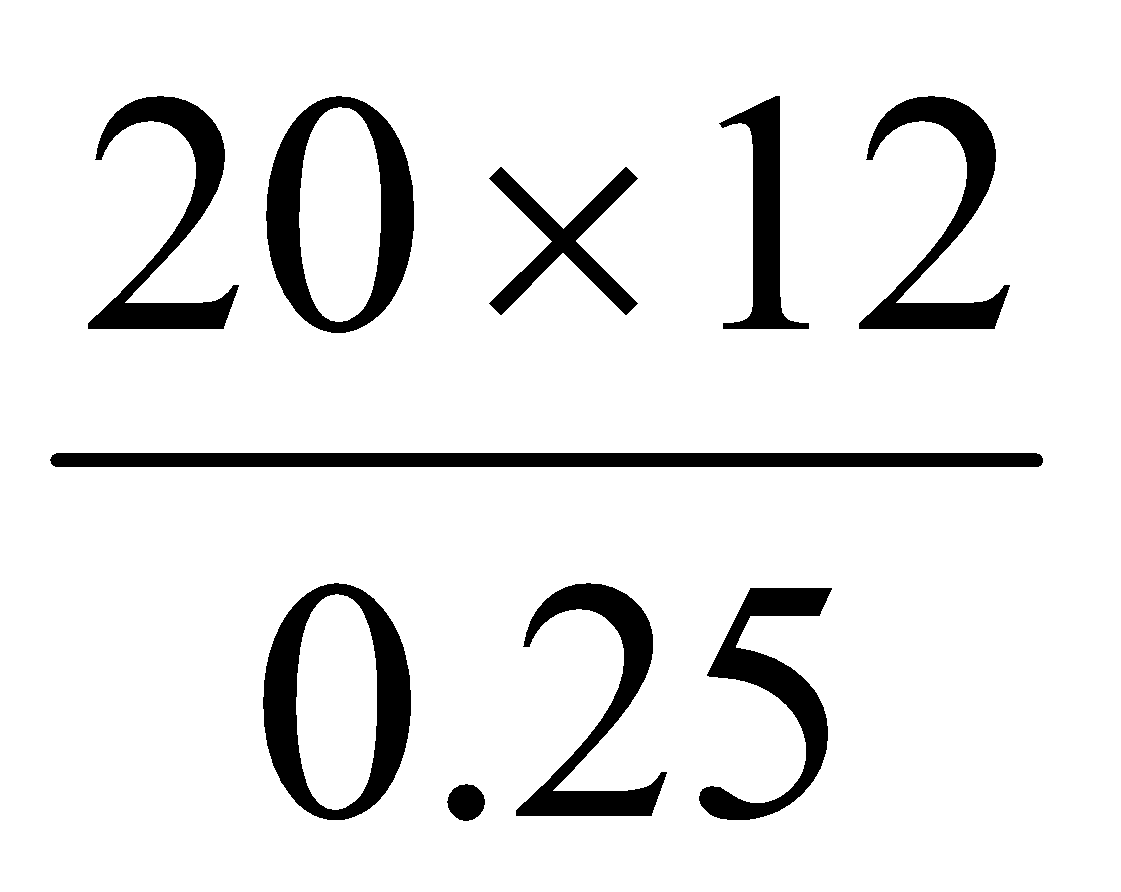 = 960 times the entire thickness of the atmosphere—before reaching the eye; which is incredible.5
I have delivered your obliging message to my son6 who will gladly avail himself of your kind offer—always supposing that circumstances—at present in abeyance should permit him giving a lecture at the R. I.7 this season.
I remain, my dear Sir, | Yours very truly | J.F.W. Herschel
RI MS JT/1/H/99
RI MS JT/1/TYP/2/521–21a
my note referred to by you: letter 1958.
regarded as an absorptive colour: see letter 1958, n. 9.
I own that all the accounts I have seen of it are to me most unsatisfactory: Herschel here effectively refutes Tyndall’s suppositions about the colour of the sky. See letter 1958, n. 9.
“pro quantitate materiae”: amount of matter (Latin).
which is incredible: i.e., not credible.
your obliging message to my son: see letter 1958. Tyndall had offered to assist Alexander Herschel with illustrating the proposed lecture.
the R. I.: see letter 1958, n. 6.
Please cite as “Tyndall1960,” in Ɛpsilon: The John Tyndall Collection accessed on