From C. S. Bate 11 December 1869
8, Mulgrave Place, | Plymouth.
Decr. 11. 69
My dear Sir
The Ilex, the Gardener says on referring to the name is Ilex Scotica.1 It is a tree about 18 feet high and smooth leafed all over except this branch, on some of the other branches that, like this one, have been cut back for the purpose of keeping the walk clear, over which they are likely to encroach, the leaves without being spinous shew a tendency to that character, as you may see by the enclosed leaf:
I can send you the branch if you would like to have it, or if you think it more desirable that it should be retained on the tree: I will watch it & report any feature that may appear worth recording.
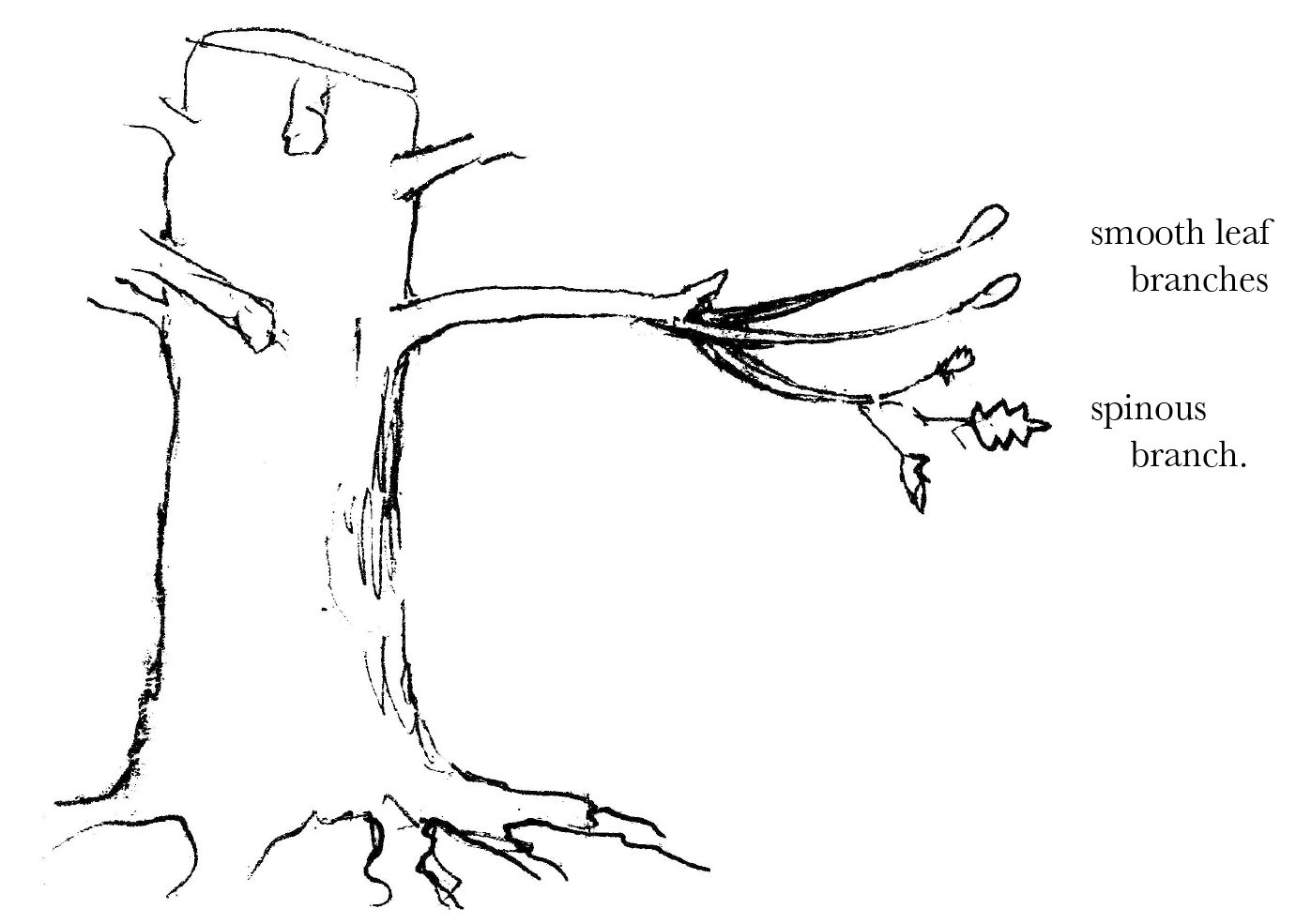
The gardener is positive that there has been no artificial budding or grafting but the variation is the result of the branch having been cut back: He considers I. Scotica as being a variety of the common Species & not as I thought a distinct species:2
Believe me | Yours sincerely | C. Spence Bate
Please cite as “DCP-LETT-7025,” in Ɛpsilon: The Charles Darwin Collection accessed on